

Presentation Title

Author

Do animals use language?

Language and Culture

Washoe video

http://www.youtube.com/watch?v=OUwOvF7TqgA

Recall

  • Wrapping up “language and culture” module
    • Language and movies
    • Conlangs
  • Let’s see how entangled our humanness is with our language and culture
    • Not just pop culture!
    • Culture includes social behaviors, institutions, societal norms in human societies, including knowledge, beliefs, arts, laws, etc.
  • In thinking about language and culture, we can explore exactly what sets humans apart from other animals (who also have culture, though different)

What is language?

Three Basics Modes of Communication

Q slide

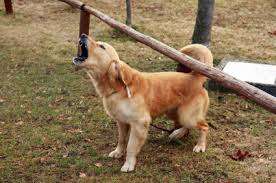
Name some ways that animals communicate to other animals (including humans).

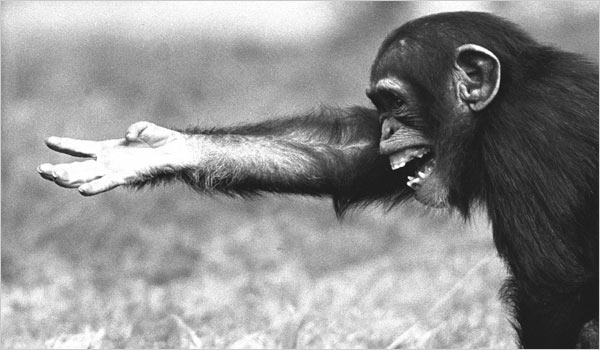
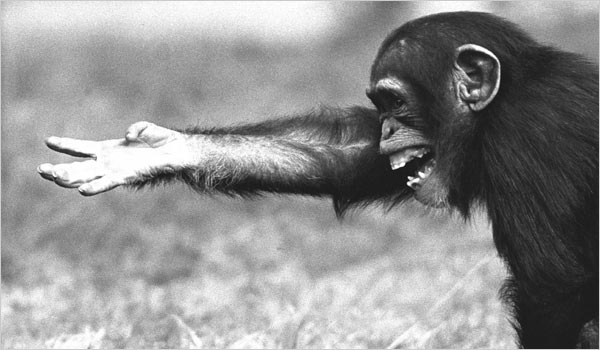
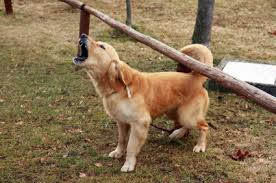
Modes for Animals: Sounds and Gestures

Modes for Animals: Visual Signs

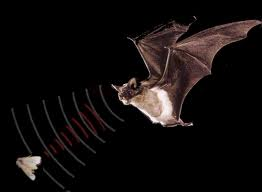
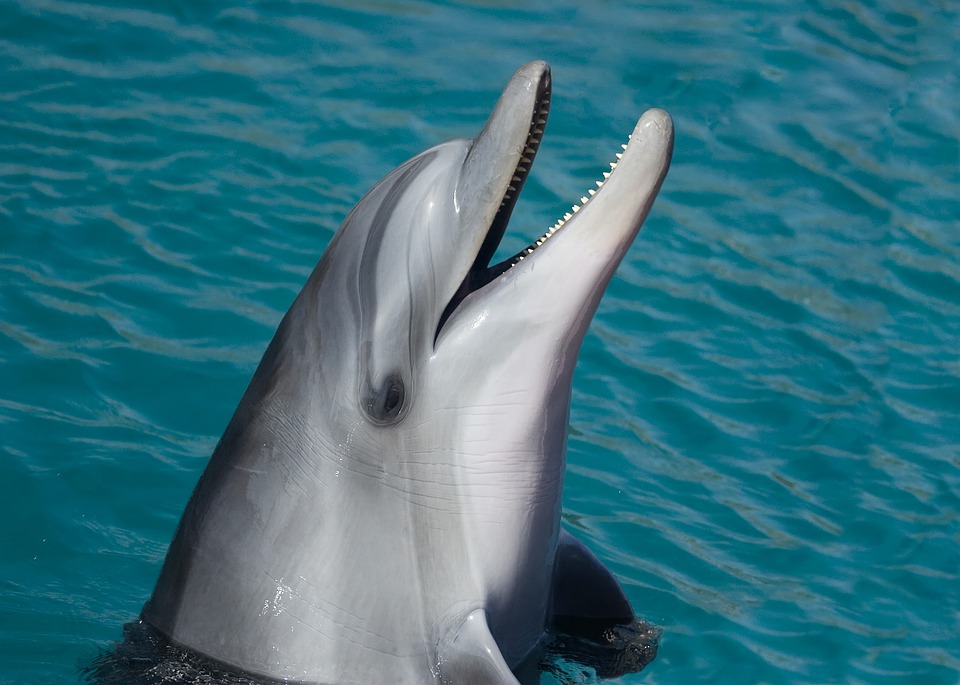
Modes for Animals: Ultrasound

Caribbean Reef Squid

Modes for Animals: Electricity and Changing Color

System = Language!

What is language?

For our discussion today, we need to outline a set of things that must be true to count as a language

So, we can say that language is a system of communication that…

Is arbitrary

Has a grammar

Exhibits duality of patterning

Always changes

Is inaccessible

Is creative

Permits displacement

Is culturally transmitted

Language exhibits arbitrariness

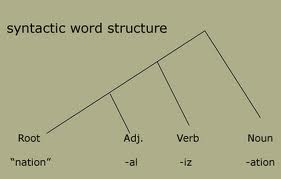
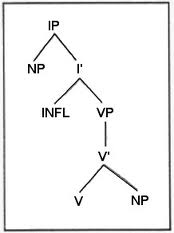
…has a grammar

…exhibits duality of patterning

  • Duality of patterning is a feature of language whereby discrete units of language at one level (such as the level of sounds) can be combined to create different kinds of units at a different level (such as words)
    • That is, we think of language as having two distinct levels that we encounter at the same time
    • Meaningless/arbitrary elements like sounds AND
    • Meaningful elements like words
    • A limited set of meaningless things that we can put together to make essentially infinite meaningful things!

Proto-Indo-European

…always changes

…is inaccessible

  • Linguistic knowledge is subconscious
  • Past tense morpheme = - ed _ _ :
    • Hunted [hʌnt -əd ]
    • Slipped [slɪp -t ]
    • Buzzed [bʌz -d ]

…is creative

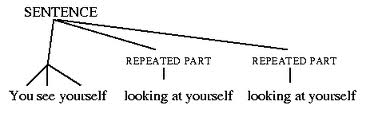
Humans are capable of producing and perceiving an infinite number of novel sentences.

…permits displacement
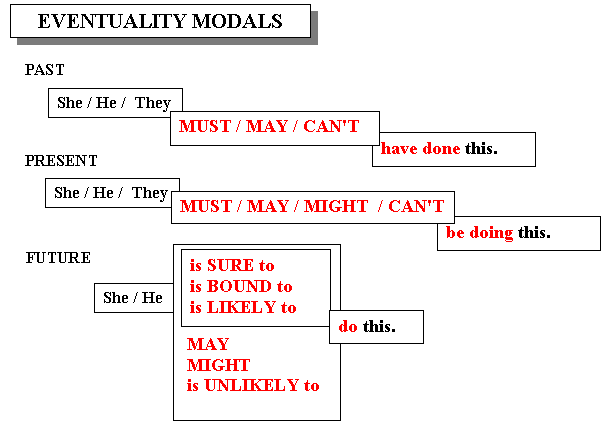
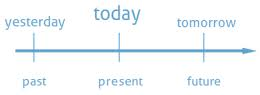
…is culturally transmitted

Bee Video

https://youtu.be/bFDGPgXtK-U?t=25s

Is a bee dance language?

  • Type of dance done by forager bees indicates precise distance to flower
    • Round dance = 5m from hive
    • Sickle dance = 5-20m from hive
    • Tail-wagging = 20+ meters
  • Angle of dance indicates direction to flower
LT Quiz

Bee dancing is arbitrary, non-arbitrary or both ?

Creativity

Permitting Displacement

*“I was the happiest I’ve ever been one year ago.”

*“Go ahead and pet me, whatever.” (Sarcasm)

*“You can stay for now, but I hope you go away next week.”

Do animals have “Language”?

  • We find that in nearly all cases, systems of non-human communication:
    • are non-arbitrary;
    • not culturally transmitted;
    • do not exhibit duality of patterning;
    • do not change;
    • lack creativity;
    • do not allow the animal to discuss past, future or hypothetical events, and most importantly
    • DO NOT __ __ have grammar!

But can any animals learn Language?

Perhaps a better comparison to human language may be found in studies of primates (mostly chimps), who are closely related to humans

The problem?

Chimpanzees do not have the same mouth and throat anatomy as humans, which makes speaking an impossible task

With a tremendous amount of effort, Viki (one chimpanzee in early work on this question) learned to (sort of) pronounce a few words like papa and cup

  • The more recent work with bonobos has brought the entire research to a different focal question – when apes use the signs we teach them, do they know what it means?
    • That is, they might use the signs in a way that looks like how humans do, but do they perceive it in the same way or are they just mimicking?
    • Savage-Rumbaugh suggests that in the earlier experiments, apes were NOT using language symbolically
    • Instead, it was conditioned behavior (do X, get Y)
    • She thinks we have to make this step first (teaching symbolism) before we can find out whether they can learn language

So, have these primates learned Language?

What’s next?

  • Come next week for “So, what?”
    • “Who really uses this stuff?”
    • “Why linguistics?”
    • Read the Conclusion in your textbook for Monday
  • Wrapping up!
    • Quiz 12 (last one!) in recitation Friday
    • Data Analysis – ask questions in recitation, come see me during our scheduled final exam time (Monday, May 5, 8-10am) in this room
    • Extra credit – see if you can still get scheduled for the research projects OR an alternative assignment will show up in Canvas on the last day of classes (due Wednesday, May 7 at 11:59pm)

Birds: Calls vs. Songs

  • Are typically not done in winter
  • Are primarily restricted to males
  • Are unique by species, can even vary by individual
  • Purpose of songs?
    • To announce and delimit the territory of the male
    • To attract a mate
  • Are made year round
  • Can be heard in both males and females
  • For many birds, individual calls associated with specific activities
  • Purpose of calls?
    • To warn of predators
    • To coordinate flocking and flight activity
    • To express aggression
    • To accompany nesting or feeding behavior.

Chaffinches

Many bird species do not develop fully characteristic songs if they’re not exposed to them early in life

If chaffinches are reared in isolation, they do sing, but only the the typical song of the species.

If young chaffinches are reared away from adults, but with other young chaffinches, the entire experimental community develops an identical song .

LT Quiz

Which feature of human language seems to also hold true for chaffinches? (Cultural transmission) [make true or false]

  • Chimps aren’t the only ones who’ve been in experiments!
    • Chantek : orangutan, learned 150 signs over 8 years
    • Kanzi : bonobo, doesn’t use ASL but lexigrams, understands spoken English and knows about 400 lexigrams

Kanzi and Sue Savage-Rumbaugh

Other Primates